
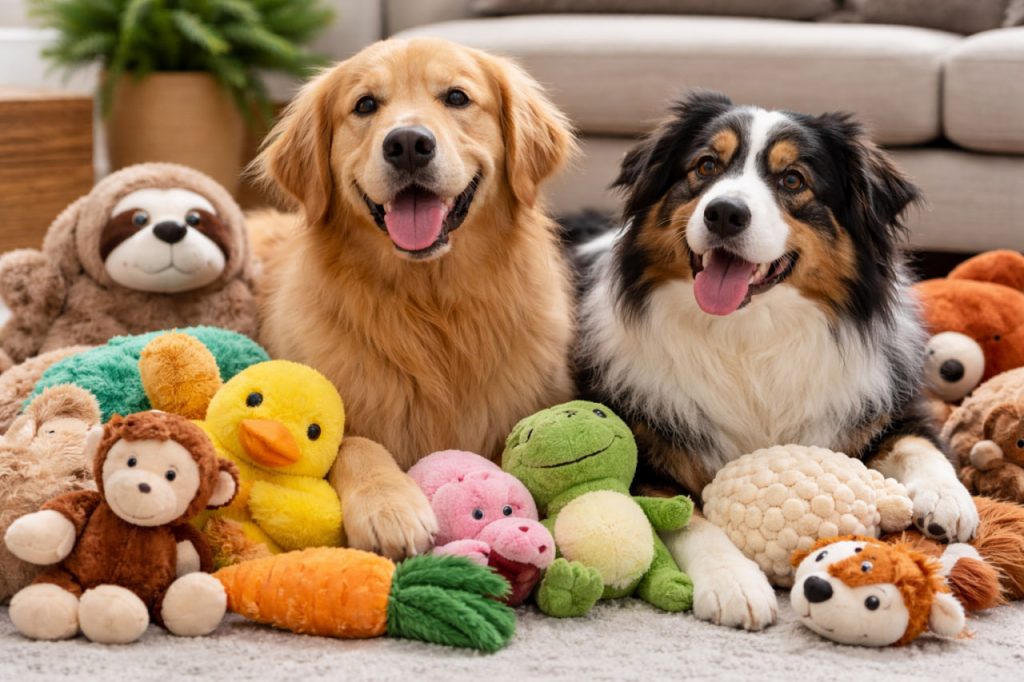
Do Dogs Need Stuffed Toys?
Stuffed toys aren’t a basic survival need—but for many dogs, they play an important role in emotional comfort, mental stimulation, and healthy play.
Plush toys can satisfy natural instincts like carrying, shaking, and gentle chewing. For puppies and sensitive dogs, they often provide a sense of security, especially during crate training or when adjusting to a new home. Some dogs even form strong attachments to a specific stuffed toy and use it as a comfort object.
However, not every dog needs or benefits from plush toys. Heavy chewers may destroy them quickly, making more durable chew toys a safer choice. In those cases, stuffed toys can still be used during supervised play rather than left out all day.
In short, dogs don’t strictly need stuffed toys—but many thrive with them. The key is choosing the right type for your dog’s personality, chewing style, and supervision level.
Comfort, enrichment, and tail-wagging fun—soft picks built for play and snuggles
Plush toys remain one of the most-loved dog product categories—and for good reason. They combine comfort, stimulation, and companionship in one soft package. While some dogs enjoy plush toys for gentle fetching or carrying, others use them for self-soothing, chewing, or interactive play.
The key to choosing the right plush toy isn’t just softness. It’s construction quality, filling type, durability, and how well the toy matches your dog’s play style.
Below is a curated guide to the 8 top-rated plush toy types that balance comfort, safety, and engagement—followed by a practical guide to choosing the right setup for your dog.
1. Classic Stuffed Plush Toy (With Squeaker)
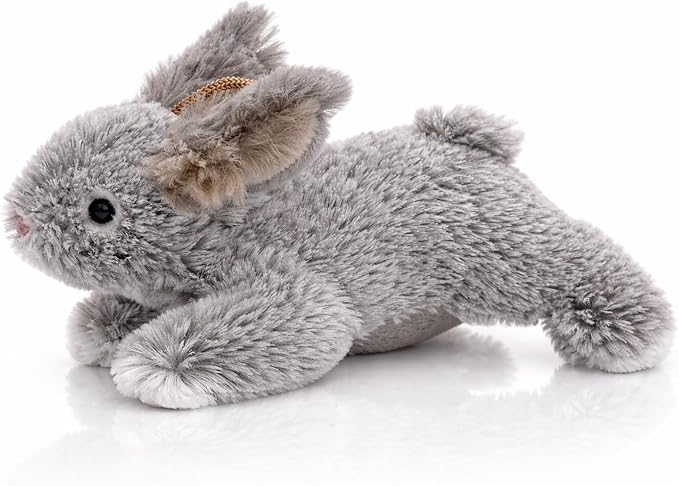
The traditional stuffed plush toy—with an internal squeaker—is a staple in many dog households. These toys typically come in animal shapes (ducks, bears, rabbits) and are designed for light chewing, fetching, and cuddling.
What Makes Them Popular
- Built-in squeaker stimulates prey drive and keeps attention longer than silent toys.
- Soft exterior makes the toy easy to carry, nuzzle, and nap with.
- Familiar shapes and textures often trigger gentle “comfort carrying” behavior.
Features to Look For
- Reinforced seams: Double stitching around the neck, legs, and tail helps prevent early splitting.
- Embroidered details: Embroidered eyes and noses are safer than plastic parts.
- Squeaker placement: A centered squeaker tends to last longer than one placed at the edge.
- Washable fabric: Plush gets grimy quickly—machine washable materials are a big win.
Best For
Indoor dogs, puppies, small to medium dogs, and gentle chewers.
Pros
- Affordable and widely available
- Highly engaging for many dogs
- Lightweight and easy to toss
Cons
- Not ideal for heavy chewers
- Squeakers can break with rough play
To buy this product on Amazon, click here.
2. Reinforced “Tough” Plush Toy
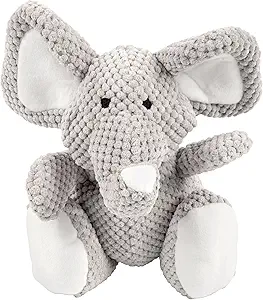
For dogs who love plush but destroy standard toys quickly, reinforced plush toys offer extra durability while keeping the soft feel dogs enjoy. These toys often include double-layered fabric, rip-resistant inner lining, and stronger stitching.
Why They Work
Reinforced plush designs typically add strength where toys fail most: the seams and belly panel. Some also use a hidden internal layer that acts like armor beneath the soft exterior. They won’t be indestructible, but they often last significantly longer for moderate chewers.
Features to Look For
- Rip-resistant lining: Helps prevent holes from turning into full tears.
- Minimal loose parts: Limbs, ears, and tails are common tear points.
- Stitching quality: Tight, even stitching is usually a better sign than thick thread alone.
Best For
Moderate chewers, medium to large dogs, and dogs that shake toys aggressively.
Pros
- Longer lifespan than standard plush
- Often less stuffing mess due to internal lining
- Still soft enough for cuddling
Cons
- Can be heavier than classic plush
To buy this product on Amazon, click here.
3. Stuffing-Free Plush Toy (No-Fluff “Skinny” Toy)
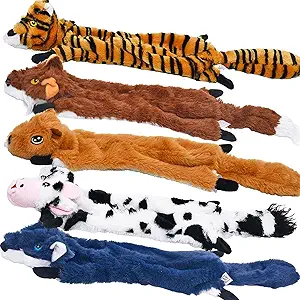
Stuffing-free plush toys remove the biggest plush downside: scattered fluff all over your house. They’re usually flat or tube-shaped and may include multiple squeakers inside.
Why These Are a Smart Choice
Many dogs instinctively “dissect” plush toys. Stuffing-free versions satisfy the chewing and shaking urge without rewarding the dog with a snowstorm of fluff—making them ideal for dogs that love the hunt but not the cleanup.
Features to Look For
- Multiple squeakers: Several small squeakers often keep a dog interested longer.
- Reinforced edges: Flat toys tend to split along the border if poorly stitched.
- Soft but thick fabric: Thin fabric tears easily because there’s no stuffing to cushion bites.
Best For
Dogs that shred plush toys, multi-dog households, and owners who hate cleanup.
Pros
- Minimal mess
- Lightweight for shaking and tossing
- Often longer-lasting than fully stuffed plush
Cons
- Less “pillow-like” for snuggling
- Seams still need monitoring
To buy this product on Amazon, click here.
4. Crinkle Plush Toy
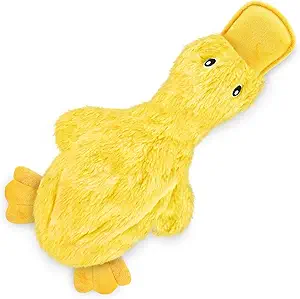
Crinkle plush toys include a crinkly material layer that makes a crackling sound when pressed, chewed, or pawed. The sound is stimulating but often quieter than a squeaker.
Why Dogs Love Them
Crinkle noise offers sensory variety and can be especially appealing to puppies and curious dogs. Many dogs enjoy the texture because it responds immediately to touch—like a reward for investigation.
Features to Look For
- Soft crinkle layer: Better toys wrap the crinkle layer in fabric so it isn’t sharp or overly stiff.
- Combination sound design: Some include both crinkle and squeaker for variety.
- Durable stitching at corners: Dogs tend to bite corners first.
Best For
Puppies, sound-sensitive homes, and dogs who like gentle play.
Pros
- Engaging sensory sound without loud squeaks
- Lightweight and easy for small dogs to manipulate
- Great for “busy” play indoors
Cons
- Crinkle layer can flatten over time
- Not designed for intense chewing
To buy this product on Amazon, click here.
5. Hide-and-Seek Toy
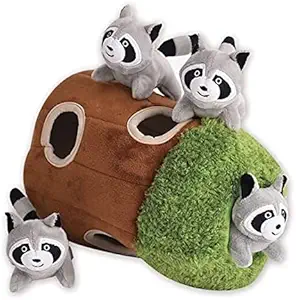
Plush hide-and-seek toys combine softness with mental enrichment. They usually feature a larger plush “home” (a log, house, box, or burrow) and several smaller plush toys that fit inside. Dogs pull out the smaller toys, often repeatedly.
Why These Work So Well
They mimic natural foraging and hunting behaviors in a safe, indoor-friendly way. Many dogs stay engaged longer with hide-and-seek plush sets than with single plush toys because the game has “steps.”
Features to Look For
- Multiple mini toys: More pieces means longer play sessions.
- Firm base structure: A sturdy outer toy holds shape better and stays interesting longer.
- Appropriate mini size: Mini toys should be large enough to avoid choking hazards.
- Low shedding fabric: Some plush sheds fibers—avoid this for dogs that mouth toys heavily.
Best For
Smart breeds, dogs prone to boredom, and dogs who need indoor enrichment.
Pros
- Strong mental stimulation
- Multiple toys in one set
- Great interactive play between dog and owner
Cons
- Small pieces require supervision
- Not for aggressive chewers
To buy this product on Amazon, click here.
6. Comfort Plush Toy (Calming or Heartbeat Style)
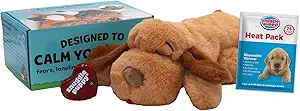
Comfort plush toys are designed to help dogs feel secure. Some include a heartbeat-like vibration module, while others focus on calming textures and a soft “snuggle” shape.
When These Are Especially Helpful
- Puppies separated from their litter
- Rescue dogs adjusting to a new home
- Dogs who struggle with crate training
- Dogs who become anxious at night or during storms
Features to Look For
- Removable module: Easier to wash safely.
- Soft, durable fabric: Comfort toys often get constant cuddling and licking.
- Safe construction: No plastic eyes, no loose attachments, and no flimsy seams.
- Size-appropriate weight: A slightly heavier plush can feel more grounding for some dogs.
Best For
Puppies, anxious dogs, and dogs who seek comfort objects.
Pros
- Supports calm behavior and rest
- Helpful during transitions and training
- Encourages soothing routines
Cons
- Not meant for chewing
- Requires cleaning care (especially if it has a module)
To buy this product on Amazon, click here.
7. Plush Tug Toy (With Rope Core)
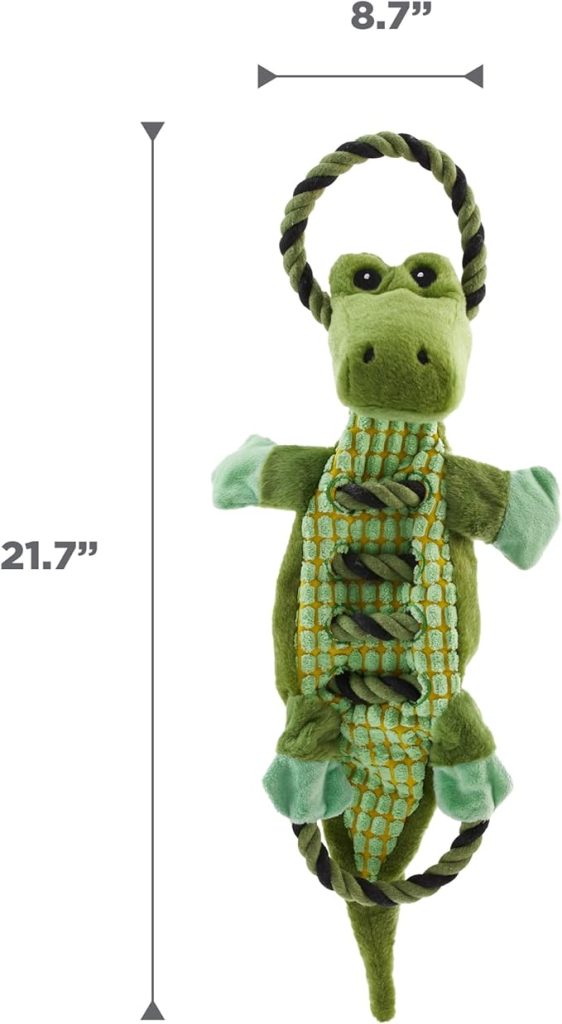
Plush tug toys combine a soft outer body with a rope or webbing core inside, giving the toy strength for pulling and shaking. Many include handles or extended limbs designed for tug.
Why They’re Different From Regular Plush
The rope core distributes stress so seams are less likely to pop immediately during tug games. This makes them a strong option for dogs who want interactive play but still love the plush feel.
Features to Look For
- Fully enclosed rope: Exposed rope ends fray and can become swallow risks.
- Wide handles: Easier on human hands and better for controlled tug play.
- Strong seam placement: Seams should be away from main tug zones when possible.
Best For
Tug-loving dogs, interactive play sessions, and medium to large dogs.
Pros
- Stronger than standard plush for tugging
- Great bonding and exercise toy
- Still soft enough for indoor play
Cons
- Not ideal for unsupervised chewing
- Rope can fray if the outer plush tears
To buy this product on Amazon, click here.
8. Jumbo Plush Toy (Oversized Snuggle Companion)
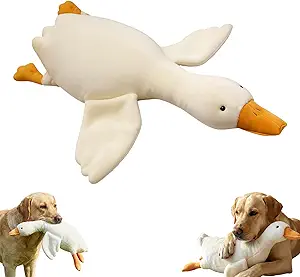
Oversized plush toys act like cuddle companions and body pillows for many dogs—especially larger breeds. Some dogs treat big plush toys like “pack mates,” gently carrying or resting against them.
Why Jumbo Plush Can Be a Great Pick
They provide more surface area for comfort. Dogs that like leaning, nesting, or curling against something often settle better with a larger plush toy nearby.
Features to Look For
- Light stuffing: Makes it easier to reposition and cuddle.
- Sturdy seams: Larger toys experience more pulling stress simply due to size.
- Low-detail design: Fewer limbs and accessories means fewer tear points.
Best For
Large breeds, gentle chewers, and dogs that cuddle.
Pros
- Comfort-focused and calming
- Great for lounging and naps
- Can double as a “pillow” in crates or beds (if sized appropriately)
Cons
- Takes up more space
- Can be expensive compared to small plush
To buy this product on Amazon, click here.
How to Choose the Right Plush Toy for Your Dog
Start With Chewing Style
- Gentle chewer: Classic plush, crinkle plush, jumbo plush
- Moderate chewer: Reinforced plush, rope-core tug plush
- Toy destroyer: Stuffing-free plush (and frequent inspection)
If your dog reliably tears toys apart within minutes, consider rotating plush toys only during supervised play rather than leaving them out all day.
Match the Toy to Your Dog’s Personality
- Anxious or comfort-seeking: Comfort plush / heartbeat toys
- High-energy: Tug plush or puzzle hide-and-seek
- Curious / easily bored: Crinkle or hide-and-seek sets
- Gentle snuggler: Jumbo plush or soft squeaker plush
Consider Household Practicality
- Want less mess? Choose stuffing-free.
- Need quieter play? Choose crinkle over squeakers.
- Multi-dog home? Avoid very small mini plush pieces.
Safety Basics to Always Follow
- Inspect seams weekly (daily for strong chewers).
- Remove toys with exposed stuffing, squeakers, or rope.
- Choose embroidered details instead of plastic parts.
- Pick a size larger than your dog can fully fit in their mouth.
Frequently Asked Questions
Are plush toys safe for dogs?
Yes—when properly sized, supervised, and replaced when damaged. The biggest risks are swallowed stuffing, squeakers, or fabric strips from torn seams.
How often should plush toys be replaced?
Replace when seams tear, stuffing becomes accessible, squeakers loosen, or the toy starts shedding fabric pieces. Some gentle dogs keep plush toys for months, while strong chewers may need replacements far more often.
Are plush toys good for puppies?
Absolutely. Plush toys can help soothe puppies, support crate comfort, and provide gentle teething relief—especially when combined with supervised play and appropriate chew options.
Can plush toys reduce anxiety?
Comfort plush toys can support calming routines, especially for puppies and newly adopted dogs. They work best when paired with consistent sleep schedules, crate training practices, and predictable daily routines.
Conclusion
Plush toys bring comfort and fun into your dog’s daily life—but the best choice depends on your dog’s chewing habits, energy level, and emotional needs. Whether you choose a classic squeaky stuffed animal, a stuffing-free “no mess” option, or a calming comfort plush, the goal is the same: safe, engaging softness that fits your dog’s style.
If you’d like, tell me your dog’s breed, age, and chewing level (gentle, moderate, or heavy)—and I can narrow this list down to the 2–3 best plush toy types for your dog.