
Where Is the Best Place for a Litter Box in Your Home?
The best litter box location balances privacy, accessibility, and consistency. Cats care less about aesthetics and more about feeling safe and undisturbed.
Good placement rules to follow:
- Quiet but not hidden: Choose a low-traffic area where your cat won’t be startled, but avoid cramped closets or dead-end corners.
- Easy access, always: Cats should be able to reach the box without navigating stairs, closed doors, or obstacles—especially seniors.
- Away from food and water: Most cats strongly prefer separation between eating and bathroom areas.
- Good airflow: Ventilated spaces help with odor control and comfort.
- Same spot long-term: Cats rely on routine. Frequent location changes can lead to avoidance or accidents.
Common good spots:
- Bathroom or laundry room
- Spare room corner
- Quiet hallway nook
Spots to avoid:
- Next to loud appliances
- Tight closets with poor airflow
- High-traffic social areas
If you use a compact litter tray, you gain flexibility—but the goal is still the same: a calm, predictable place your cat feels comfortable using every day.
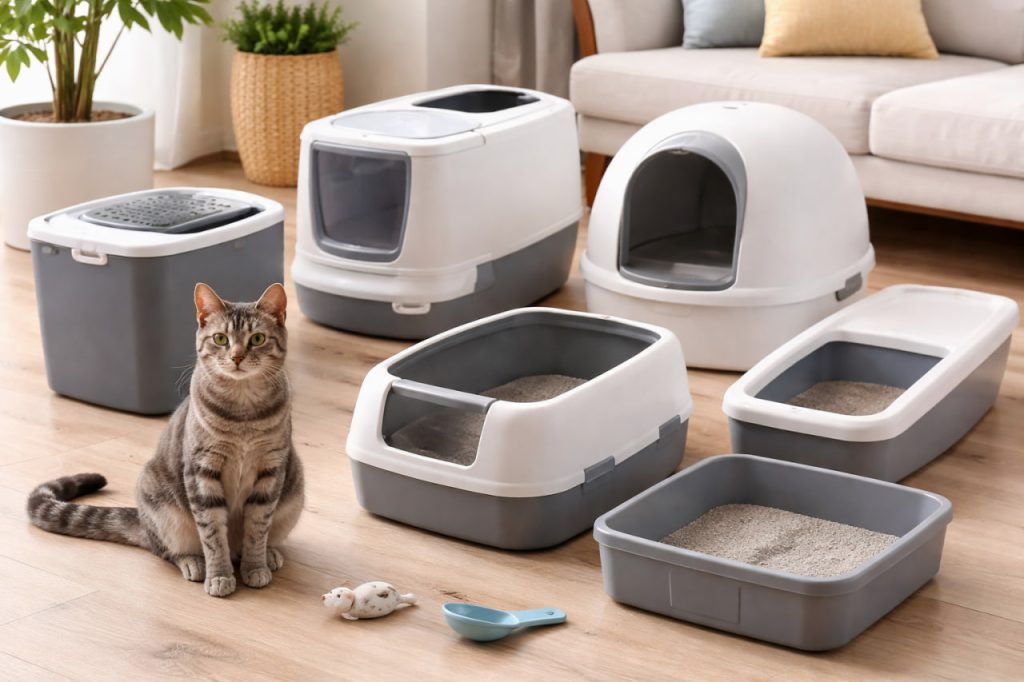
Top 8 Compact Pet Litter Tray Products
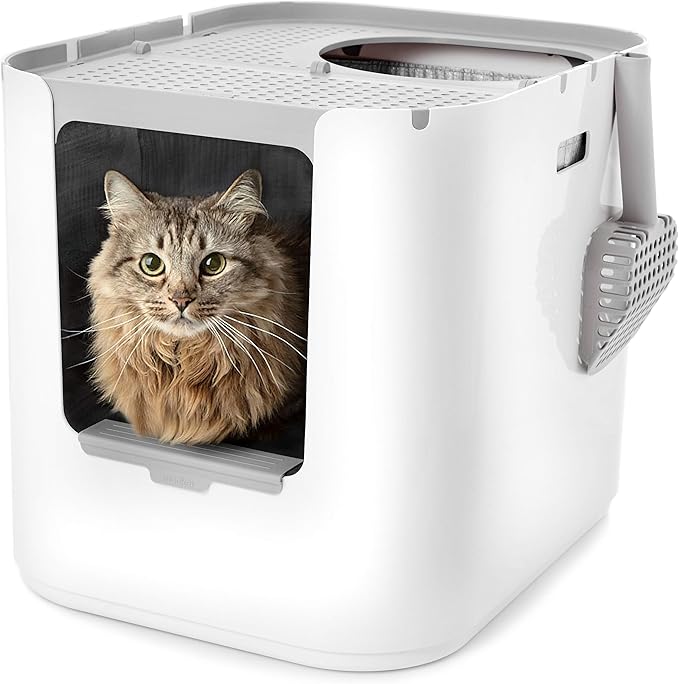
1. Modkat XL Litter Box — Covered Elegance for Small Spaces
Why it works:
A sleek, covered tray that keeps litter contained without feeling bulky.
Best for: Apartments, finicky cats who like privacy, and owners who want a minimalist look.
- Design highlight: Top entry reduces tracking and keeps litter inside even with enthusiastic diggers.
- Cleaning tip: The top lifts off for fast scoop and refresh.
- Size vibe: Compact footprint but roomy interior.
More detail:
The Modkat XL is essentially a modern redesign of the box-with-hood concept, with sturdier materials and a top-entry door panel that flips open for cleaning. Its interior space is deceptively generous — even large cats can turn around comfortably. The lid fits tightly to block odors, and there’s a built-in liner clip system that keeps bags from slipping during cleanup. Many users report fewer litter scatter issues compared to standard open boxes.
Pros
- Attractive and modern
- Excellent litter containment
Cons
- Top-entry might be tough for kittens or senior cats
To buy this product on Amazon, click here.
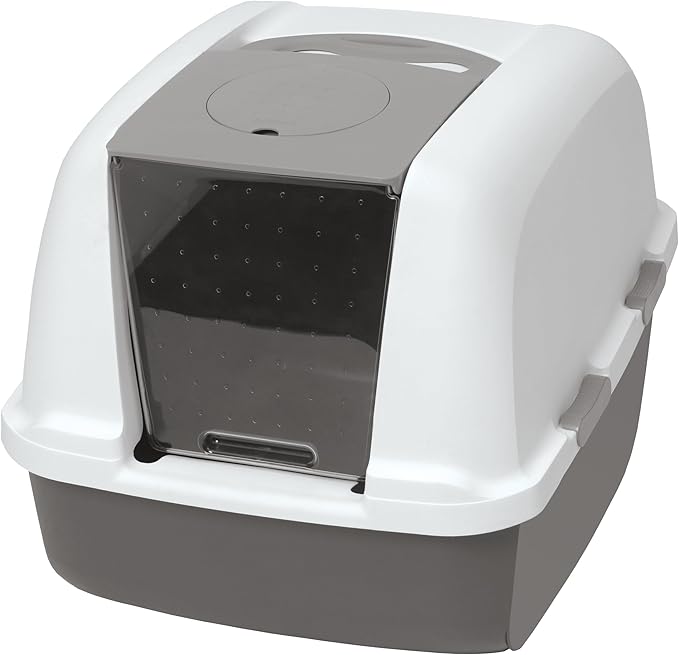
2. Catit Jumbo Hooded Cat Litter Pan — Big Interior in a Small Footprint
Why it works:
This hooded litter tray feels spacious inside but doesn’t dominate the room.
Best for: Multi-cat homes and cats that need a little extra wiggle room.
- Ventilation: Helps reduce odors while keeping the tray discreet.
- Maintenance: Removable hood makes cleaning easy.
More detail:
The Catit Jumbo Hooded Pan is a classic covered option with a thoughtful twist: it has comfortably high walls inside that give larger cats more space to move without making the exterior bulky. The hood is vented to improve airflow, which reduces lingering odors — a big plus in small living areas. Its built-in handles make it easy to lift for scooping or when emptying the box. The simplicity of the design also means fewer parts to lose or replace.
Pros
- Great value
- Spacious interior
Cons
- Hooded design still adds height
To buy this product on Amazon, click here.
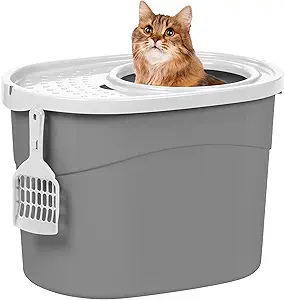
3. IRIS USA Top Entry Cat Litter Box — Simple, No-Mess Top Entry
Why it works:
A classic space-saving choice with a top entrance—great for litter containment and privacy.
Best for: Active diggers and homes with carpet or wood floors.
- Stuff stays inside: The top-entry design keeps litter off floors.
- Low profile: Doesn’t protrude into living space.
More detail:
The IRIS USA Top Entry Cat Litter Box keeps the mess and smell inside because cats jump in from the top instead of walking through it. Its raised edges reduce scatter, making it ideal if you’re trying to protect nearby floors and carpets. The top lid is also easy to lift off when it’s time to scoop. Simple, no-fuss mechanics make this a strong choice if you want function over bells and whistles.
Pros
- Budget-friendly
- Easy to use
Cons
- Some cats don’t like top entry
To buy this product on Amazon, click here.
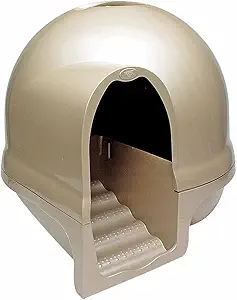
4. Petmate Booda Dome Clean Step Cat Litter Box — Step-In Comfort and Containment
Why it works:
A hybrid covered design with a side step entry that helps reduce tracking.
Best for: Cats that find top entry challenging but still need privacy.
- Step entry: Helps shake litter off paws as cats exit.
- Deep base: Ideal for clumping litter with minimal scatter.
More detail:
The Booda Dome Clean Step uses a side-entry ramp that catches litter from your cat’s paws as they exit — a clever way to decrease tracking on your floors. It’s roomy inside, and the dome offers the sense of privacy many cats prefer. The lid locks securely to reduce odors and keep pets from pushing litter out the front. For multi-cat homes, its larger interior volume means fewer clogs and less flipping of litter.
Pros
- Less mess on floors
- Spacious interior
Cons
- Bulkier than true “compact” trays
To buy this product on Amazon, click here.
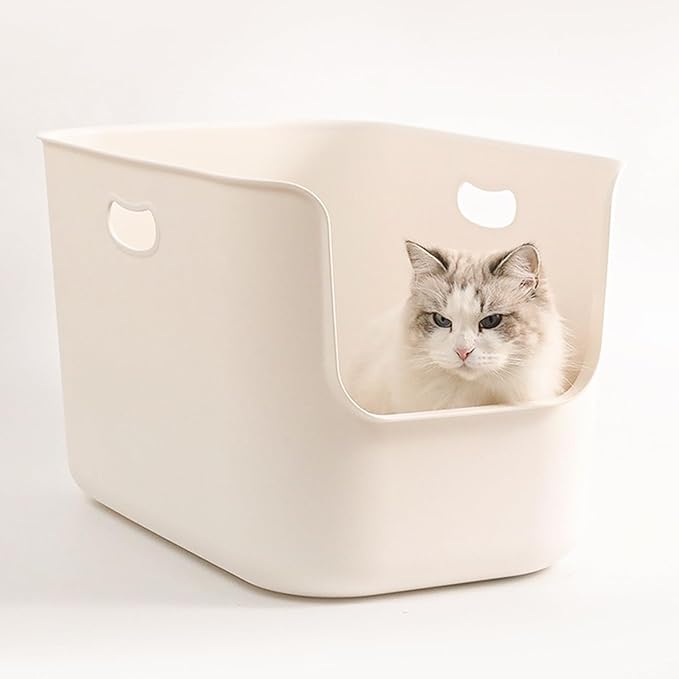
5. High-Sided Litter Box — Tall Walls, Minimal Fuss
Why it works:
Has a high-sided profile that helps stop scatter — without a hood.
Best for: Kittens and light chewers who don’t need a cover.
- Open design: Great for cats who dislike enclosed spaces.
- Contamination control: Tall sides keep pee and litter inside.
More detail:
This high-sided box gives you simple, open access without sacrificing control. The tall walls are especially effective for cats that dig enthusiastically or tend to kick litter. Because it doesn’t have a hood, there’s less concern about feeling trapped — something that matters for cats who prefer openness. Cleanup is a breeze since you can scoop straight in without removing a lid.
Pros
- Simple, no hood to remove
- Easy for pets of all ages
Cons
- Doesn’t contain odors as well as covered options
To buy this product on Amazon, click here.
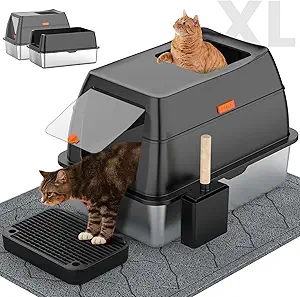
6. Top Entry Litter Box — Sleek, Modern, and Easy to Clean
Why it works:
A well-designed top-entry option with a more polished look.
Best for: Owners who care as much about design as function.
- Rounded interior: Less litter catch and easier scooping.
- Carbon filter compatibility: Helps manage odors.
More detail:
The Smarty Pear Top Entry Litter Box has a clean, rounded interior that keeps litter from getting trapped in corners — making scooping and washing much faster. Its top-entry design naturally minimizes scatter. Aesthetic-minded owners also like that it doesn’t look “like a litter box” — a subtle plus when every corner counts in a small home.
Pros
- Great for small spaces
- Stylish and functional
Cons
- Not ideal for older cats with limited mobility
To buy this product on Amazon, click here.
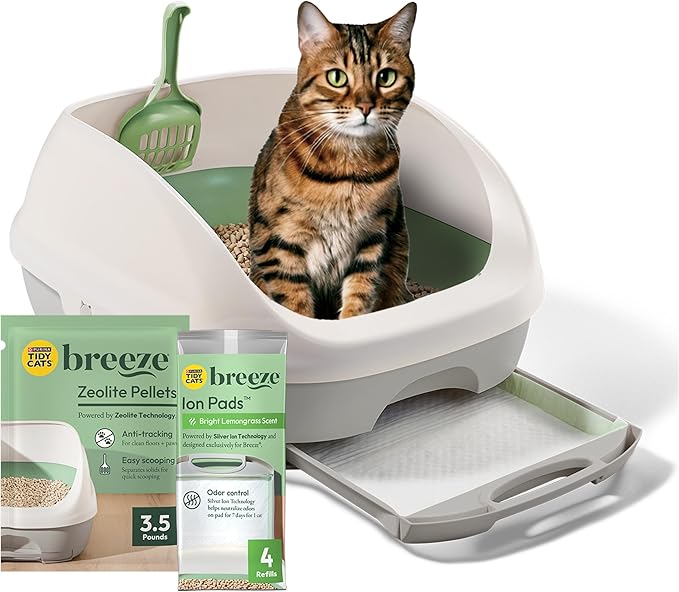
7. Purina Tidy Cats Breeze Litter Box System — Pellet System with Minimal Mess
Why it works:
A different take: pellet system, minimal tracking, super easy waste removal.
Best for: Owners with mobility issues or anyone who wants super easy cleanup.
- Specialty pellets: Designed to reduce tracking and smell.
- System trays: Waste separates into a pull-out drawer.
More detail:
The Tidy Cats Breeze system doesn’t use traditional clumping litter — instead, it uses low-dust pellets and a dual-tray design that separates urine into a pull-out reservoir. This makes cleanup incredibly simple: scoop solid waste and empty the urine tray on a schedule. The system works especially well for homes where litter scatter and odor control are top priorities. It’s also easy on hands and clothes since there’s minimal dust.
Pros
- Very low mess
- Simple daily cleanup
Cons
- Pellet system takes adjustment if you’re used to clumping litter
To buy this product on Amazon, click here.
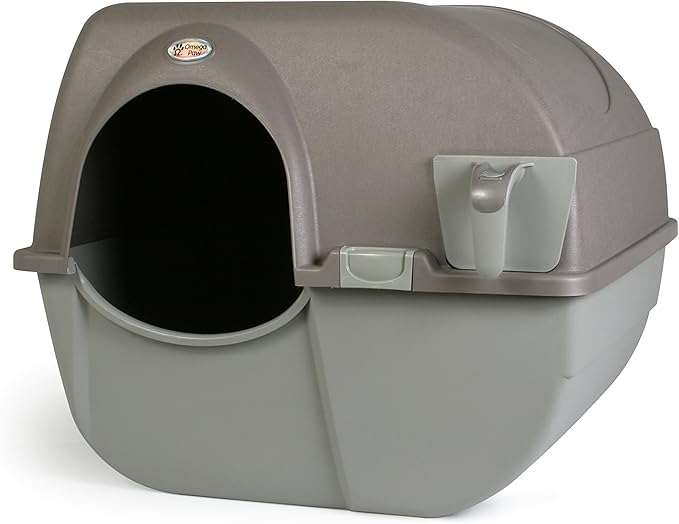
8. Omega Paw Roll-’n-Ease Cat Litter Box — Compact Roll-Clean Convenience
Why it works:
A uniquely simple mechanism lets you roll the box to sift litter without scooping.
Best for: Owners who hate scooping and want a quick cleanup trick.
- Roll-and-sift: Turning the tray sifts waste into a compartment.
- Compact shape: Works well in tight corners.
More detail:
This litter box introduces a best-seller convenience hack: by gently rolling the box on its side, waste separates from clean litter and collects in a built-in compartment — no daily scooping required. It’s especially appealing if regular scooping feels like a chore. The compact footprint makes it ideal for tight spaces, and the removable liner simplifies deep cleaning. Just note — the system works best with standard clumping litters, and very lightweight litters may not sift as cleanly.
Pros
- Super easy daily maintenance
- Small footprint
Cons
- Not ideal for large cats
To buy this product on Amazon, click here.
Choosing the Right Compact Litter Tray (Explained in More Detail)
Choosing a compact litter tray isn’t just about saving space—it’s about matching the tray to your cat’s habits, body, and comfort level so they’ll actually use it consistently.
1. Measure your space realistically
Compact trays save floor space, but height and entry style still matter. Covered and top-entry boxes need vertical clearance, while hooded or dome styles need enough room to lift the lid for cleaning. Always account for access space, not just the tray’s footprint.
2. Match the tray to your cat’s behavior
- Heavy diggers or scatterers: Top-entry or high-sided trays keep litter inside and floors cleaner.
- Shy or privacy-seeking cats: Covered or hooded trays help them feel secure.
- Older or mobility-limited cats: Avoid top-entry designs; look for low or side-entry access.
- Large cats: Focus on interior turning space, not exterior size labels.
3. Consider odor control needs
Covered trays, carbon filters, and pellet systems help manage smells, especially in small homes. That said, no tray replaces regular scooping—ease of cleaning often matters more than enclosure.
4. Think about cleaning style
- If you scoop daily, simple open or hooded trays may be easiest.
- If you dislike scooping, roll-and-sift or pull-out tray systems can reduce effort.
- Fewer parts generally mean faster cleaning and less frustration.
5. Don’t ignore your cat’s preferences
A “perfect” tray doesn’t work if your cat dislikes it. When switching styles (open to covered, clumping to pellets), transition gradually to avoid litter box avoidance.
In short, the best compact litter tray is the one that fits your space, your routine, and your cat’s comfort—not just the smallest option on the shelf.
Quick FAQs
Are compact trays OK for big cats?
Yes — prioritize interior space over the outside footprint.
Do covered trays trap odors?
They help, especially with filters — but scoop daily.
Which is easiest to clean?
Pull-out drawer systems and sifting boxes make cleanup faster than standard trays.
Conclusion
Compact litter trays are about more than saving space—they’re about creating a setup your cat will actually use comfortably every day. When the tray fits your home and your cat’s habits, you get less mess, easier cleanup, and fewer litter box issues overall.
Whether you choose a top-entry design to control scatter, a covered tray for privacy, or a low-entry option for accessibility, the right compact litter tray should feel easy to maintain and stress-free for your cat. Prioritize comfort, consistency, and practicality, and even a small litter area can work beautifully in any home.